
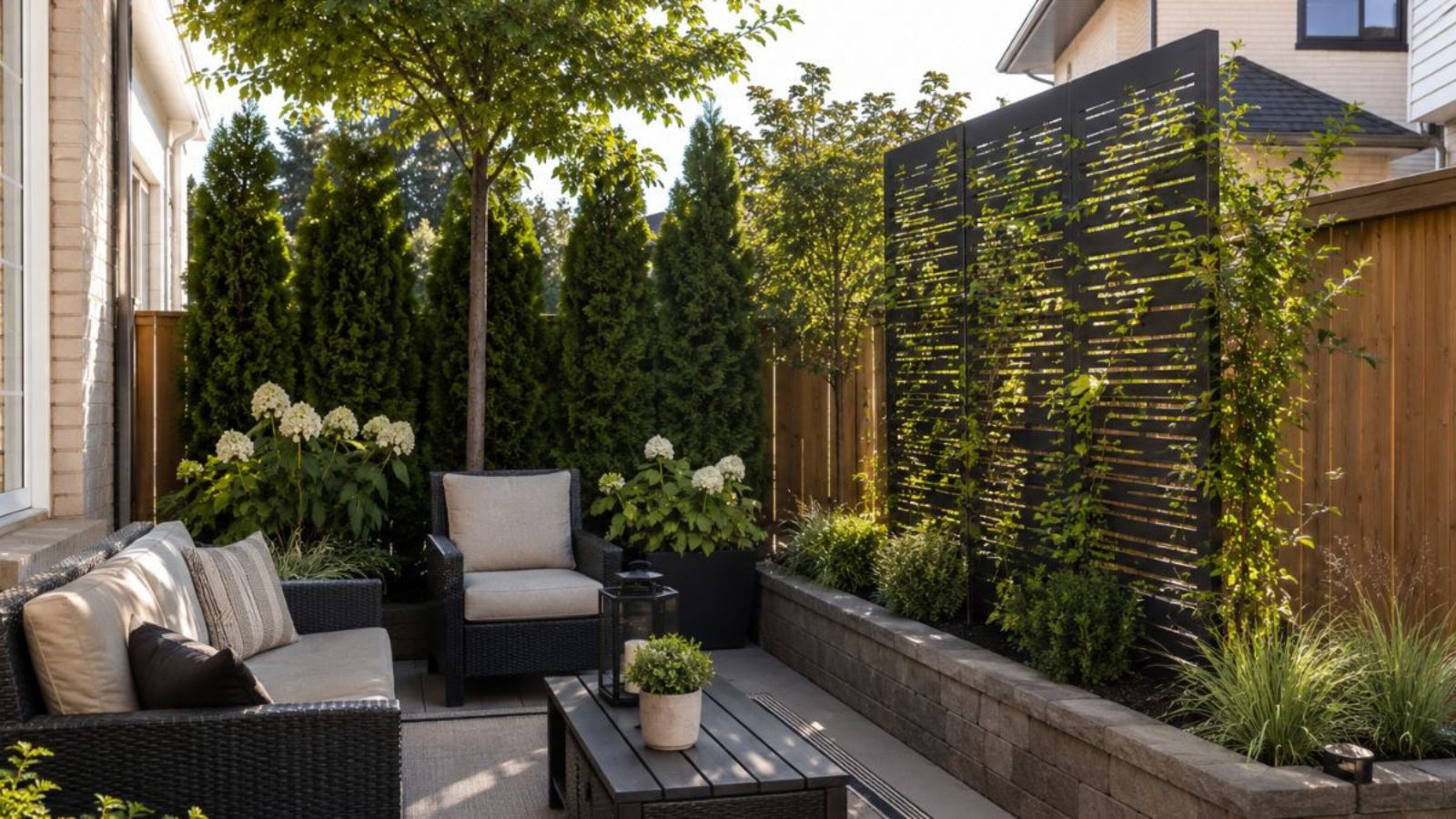
In Omaha, patio privacy projects rarely begin with a request for a fence or a row of trees. They usually begin with a homeowner noticing that an outdoor space does not function the way it was expected to.
The most common concerns we see are patios sitting directly within a neighbor’s view, seating areas exposed to nearby windows, or outdoor spaces that feel uncomfortable despite having plenty of room.
When we evaluate these properties, the issue is rarely the lack of a barrier. It is usually a mismatch between the patio location, the surrounding elevations, and the way views move through the yard.
That difference matters because effective patio privacy from neighbors depends on understanding the property first. The best solutions are based on sightlines, site conditions, and how the space will actually be used.
Privacy Problems Often Begin With Placement
A common situation we see in Omaha is a patio that works well structurally but creates privacy concerns after furniture, lighting, and outdoor living features are added.
A homeowner may not notice the issue during construction because the empty patio looks open and functional. The concern often appears later when someone is sitting at a dining table or gathering area and realizes the neighbor’s deck, driveway, or second-story window has a direct view.
Before selecting plants or structures, we evaluate where the exposure is coming from. A privacy issue caused by elevation is different from one caused by a side yard opening.
Factors that influence the design include:
- Neighboring homes that sit higher on sloped lots
- Patios positioned close to side property lines
- Views from upper-level windows
- Outdoor spaces that face frequently used areas
- Seasonal changes that affect visibility
In many Omaha neighborhoods, lot sizes and home spacing leave limited room for large privacy buffers. That makes placement and targeted screening more important than simply adding more material.
Layered Planting Reduces Exposure Without Closing The Yard
A frequent request is for a “green wall” that completely blocks neighboring views. The challenge is that a single row of plants often creates a short-term solution rather than a long-term landscape design.
In practice, layered planting performs better because each plant group serves a different purpose. Taller trees can interrupt distant views, while shrubs and ornamental grasses address lower sightlines closer to the patio.
On Omaha properties, we often consider how plants respond to seasonal conditions. A planting that looks effective in July may provide less coverage during winter if the selected species loses density.
A layered privacy design may include:
- Evergreen trees for year-round structure
- Shrubs that fill the middle viewing area
- Ornamental grasses that soften open spaces
- Perennials that add seasonal coverage near seating areas
The goal is not to create a solid wall around the patio. It is to reduce the uncomfortable views that make the space feel exposed.
Structural Screens Solve Specific View Problems
Not every privacy concern requires a full landscape buffer. A common mistake is extending fencing or planting across an entire property when the problem exists in one specific area.
For example, a homeowner may only need screening beside an outdoor dining area where a neighboring window creates direct visibility. A smaller feature in the right location can often provide more effective results than a larger barrier placed farther away.
Privacy structures we evaluate include:
- Decorative screens near seating areas
- Pergolas that provide overhead separation
- Fencing combined with landscape materials
- Built-in planting areas around patios
The important factor is how the feature interacts with the rest of the yard. A privacy element should solve the viewing issue without creating unnecessary shade, restricting movement, or making the patio feel disconnected.
Plant Selection Determines Long-Term Privacy
Many homeowners focus on how much coverage a plant provides when installed. In Omaha conditions, the more important question is how that plant will perform after several growing seasons.
A plant that grows quickly but struggles with local conditions may require replacement before it ever reaches its intended purpose. Wind exposure, summer heat, winter temperature changes, and soil conditions all influence privacy planting success.
We typically evaluate:
- Mature height and width
- Growth habits over time
- Tolerance for Omaha weather conditions
- Maintenance requirements
- Spacing needed for healthy development
Evergreens are often considered for privacy because they maintain structure throughout the year. However, placement matters. A plant exposed to harsh winter winds or crowded into a narrow planting area may not develop the density homeowners expect.
Long-term privacy comes from selecting plants that fit the property, not just choosing the tallest available option.
Outdoor Privacy Should Match How The Patio Is Used
A recurring pattern in patio planning is that privacy needs depend heavily on how the space functions.
A patio used for family meals requires different screening than a quiet sitting area near a garden. Outdoor kitchens, fire features, and entertaining spaces often need privacy around specific zones rather than the entire yard.
In Omaha, seasonal use also affects these decisions. A patio that feels comfortable during summer gatherings may feel more exposed during early spring or fall when surrounding vegetation is thinner.
Design considerations often include:
- Where people naturally sit and face
- Which areas require more separation
- How sunlight moves across the patio
- Whether privacy is needed all year or during specific seasons
This approach prevents overbuilding and keeps privacy improvements connected to the overall landscape.
Creating Comfortable Patio Privacy From Neighbors
Effective patio privacy from neighbors starts with identifying why a space feels exposed before selecting plants or structures.
Sightlines, seasonal changes, and how the patio is used all influence whether a privacy solution performs well over time.
The most successful designs address specific viewing concerns while preserving the openness of the outdoor space. Careful planning helps avoid unnecessary barriers and creates a patio that feels more natural within the surrounding landscape.
Frequently Asked Questions
How tall should a patio privacy screen be?
The correct height depends on the source of the unwanted view. A screen designed to block a neighboring patio may require a different approach than one intended to reduce visibility from an elevated window.
Are evergreens a good option for patio privacy?
Evergreens can provide year-round structure, but performance depends on species selection, placement, and growing conditions. In Omaha, exposure and spacing play a major role in long-term results.
Can landscaping provide privacy without a fence?
Yes. Trees, shrubs, grasses, and layered plantings can reduce visibility while creating a softer transition between properties. Many patio projects combine landscaping with existing fencing.
Why does my patio still feel exposed after adding a fence?
A fence may block ground-level views while leaving sightlines open from nearby decks, windows, or higher elevations. Additional screening may be needed to address those remaining angles.
When should privacy plantings be installed?
Spring and early fall are often favorable planting periods in Omaha because moderate temperatures allow roots to establish before extreme summer heat or winter conditions arrive. The best timing also depends on plant type and site conditions.
Arbor Hills Landscaping Company Omaha | Best Landscaping Company in Omaha, NE
Arbor Hills Trees & Landscaping Services can provide you with everything from detailed maintenance programs to unique plant production and other services in between. That means we build water features, walls, patios, irrigation, walkways, outdoor kitchens, lighting, and anything else you can help us dream up. Our professionally trained staff can build the landscape of your dreams and keep you from breaking any Home Landscaping Rules. Contact us today.