
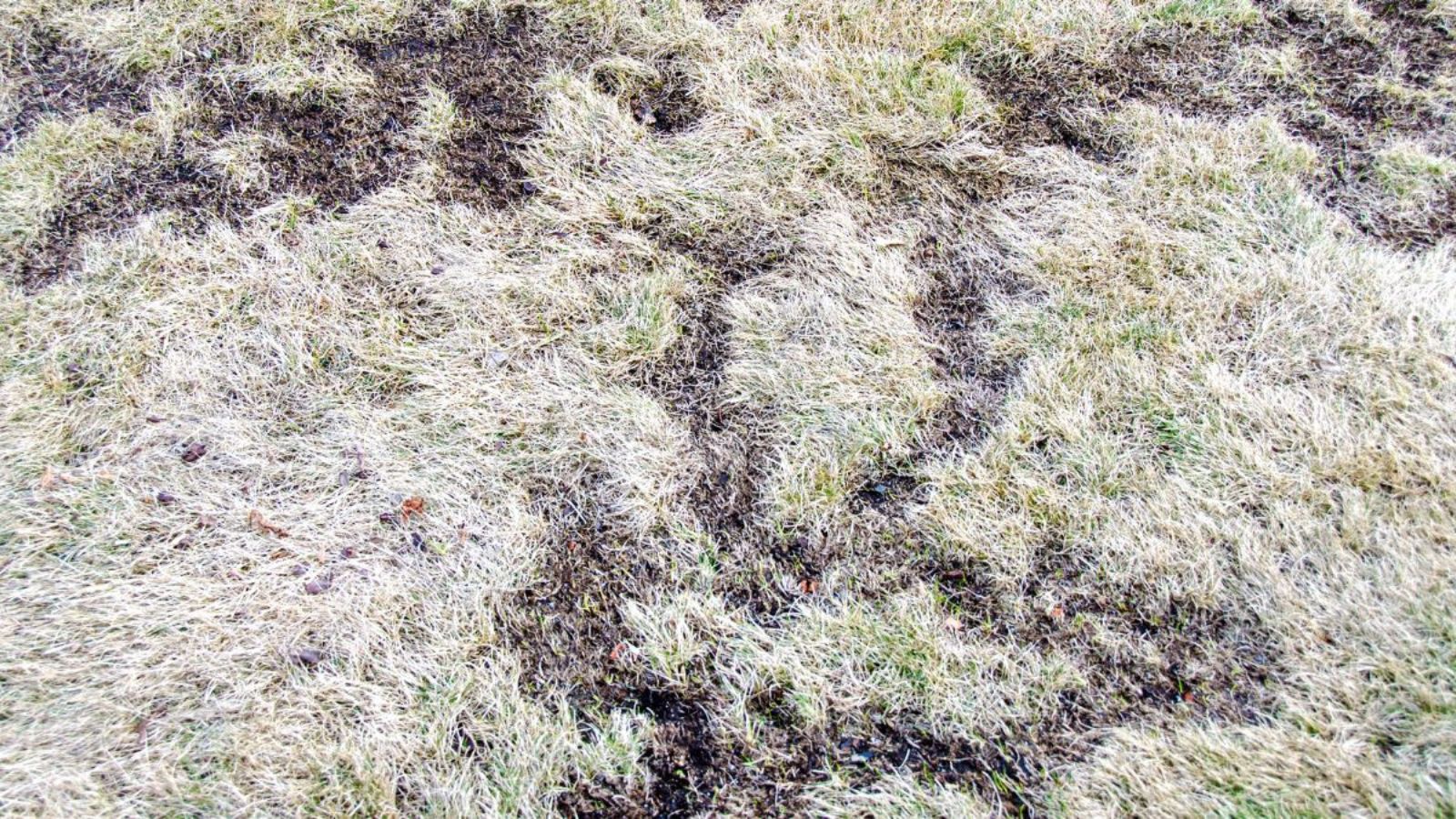
A post-winter yard often reveals damage from snow, ice, and winter debris. Grass may be thin, brown patches visible, and leftover branches and leaves scattered across the landscape. Dormant weeds, compacted soil, and frost damage can make the yard look neglected and unkempt.
Early spring attention prepares the lawn for healthy growth before summer. A thorough inspection identifies areas needing care and allows for targeted fixes. Proper treatment during this season ensures a vibrant, well-maintained landscape while reducing long-term maintenance needs.
Common Challenges in a Post-Winter Yard
Dead Grass and Thin Spots
A frequent sight in a post-winter yard is uneven or thin grass. Frost heaving, ice accumulation, and heavy snow cover can damage roots. Bare spots or discolored patches often appear where snow and ice were thickest.
Soil compaction adds to the problem by limiting air and water penetration and nutrient uptake. Over time, these conditions make it difficult for plant roots to establish. Aerate the lawn and overseed with the right grass variety. These simple steps restore density and support healthy root growth.
Debris and Winter Residue
Leaves, broken branches, and leftover mulch can hide under snow during winter. When the snow melts, these materials may suffocate grass and create muddy patches. A cluttered yard also attracts pests and slows soil drying.
- Rake or blow leaves and branches
- Clear leftover layer of mulch that may smother the grass
- Remove any broken branches to reduce pest habitat
Clearing debris allows sunlight to reach dormant grass and prepares the yard for fertilization and aeration.
Compacted Soil and Drainage
Soil compaction is a common hidden issue in a post-winter yard. Foot traffic, frozen ground, and heavy snow press the soil, reducing oxygen for roots. Heavy equipment or frequent foot traffic can worsen compaction. Compacted areas often appear waterlogged after melting snow, while other areas remain dry.
| Problem | Suggested Action |
|---|---|
| Water pooling | Aerate soil and apply topdressing |
| Dry, hard spots | Mechanical aeration or manual core removal |
| Limited root system growth | Add organic compost to improve soil structure |
Short-term fixes improve drainage, increase nutrient availability, and encourage root growth. Regular monitoring ensures problem spots do not worsen throughout the season.
Early Weed Growth
Winter weeds, such as chickweed or henbit, often take advantage of exposed soil in a post-winter yard. Early emergence competes with grass for water and nutrients and can spread quickly if left untreated.
Weed Management Tips
- Apply a selective pre-emergent herbicide.
- Remove weeds manually to prevent spreading.
- Maintain dense grass to naturally block weeds.
5 Key Lawn Care Steps for a Post-Winter Yard
Proper intervention in early spring can transform a neglected post-winter yard. These five fixes restore lawn health and prepare it for the growing season.
| Fix | Purpose | Notes |
|---|---|---|
| Raking and Debris Removal | Eliminates dead leaves and branches | Prevents suffocation of grass |
| Aerating your lawn | Reduces soil compaction | Use a spike or plug aerator |
| Overseeding with cool-season grass |
Fills bare spots | Choose a grass variety suited to the region |
| Fertilization | Supports early growth | Apply slow-release fertilizer |
| Weed Control | Prevents competition | Focus on pre-emergent and early treatment |
Following these steps addresses the most common issues revealed by melting snow and thawed soil. Implementing them in a timely manner encourages rapid green-up and minimizes summer lawn stress.
Mulching and Lawn Care
Mulching grass clippings and applying organic amendments can improve soil structure and moisture retention. A post-winter yard benefits from light mulching to protect tender roots while adding nutrients. Avoid excessive mulch that can smother new growth.
Routine mowing begins once the grass reaches a healthy height. Using proper lawn mowers and cutting no more than one-third of the grass blade encourages thicker growth and prevents stress. Early-season watering supports germination and recovery from winter damage. Light watering also helps actively growing plants.
Preventing Long-Term Damage
Monitoring and Maintenance
Seasonal inspections reduce the risk of long-term problems in a post-winter yard. Checking for lingering debris, pest activity, or uneven soil allows for early intervention. Regular monitoring keeps small issues from escalating into costly repairs.
Short maintenance sessions, such as spot aeration, light fertilization, and minor irrigation adjustments, help sustain lawn health. Observing how the yard responds to spring weather guides future maintenance strategies. Soil testing may help determine nutrient deficiencies and pH balance.
Preparing for Summer
Addressing post-winter challenges early ensures a strong foundation for summer growth. Healthy soil, evenly distributed grass, and minimal weed pressure create a lawn resilient to heat, drought, and heavy use. These efforts also reduce the need for extensive repairs later in the season.
Maintaining a post-winter yard through consistent care establishes a visually appealing landscape. Early intervention maximizes growth potential and protects investments in landscaping. Proper soil and enough water help roots grow deep and stay healthy during the warm-season grass period.
Frequently Asked Questions
What is the best time to fix a post-winter yard?
Early spring, immediately after the snow melts and the soil becomes workable, is ideal. Prompt attention ensures grass recovery before peak growing conditions.
Can small winter damage affect long-term lawn health?
Yes, even minor frost or ice damage can weaken roots and invite weeds. Early corrective measures prevent long-term thinning and bare spots.
Does aeration really help a post-winter yard?
Aeration relieves soil compaction and improves root access to nutrients and water. It is especially effective in areas with heavy foot traffic or clay soils.
Is fertilization necessary this early in spring?
Yes, applying slow-release fertilizer supports early growth and helps grass recover from winter stress. Proper timing prevents nutrient loss and encourages healthy development.
Can watering too early harm a post-winter yard?
Yes, excessive early watering can saturate compacted soil and stress dormant roots. Light, controlled watering encourages recovery without causing puddles or runoff. Water your lawn appropriately to support new growth without overwatering.
Arbor Hills Landscaping Company Omaha | Best Landscaping Company in Omaha, NE
Arbor Hills Trees & Landscaping Services can provide you with everything from detailed maintenance programs to unique plant production and other services in between. That means we build water features, walls, patios, irrigation, walkways, outdoor kitchens, lighting, and anything else you can help us dream up. Our professionally trained staff can build the landscape of your dreams and keep you from breaking any Home Landscaping Rules. Contact us today.