
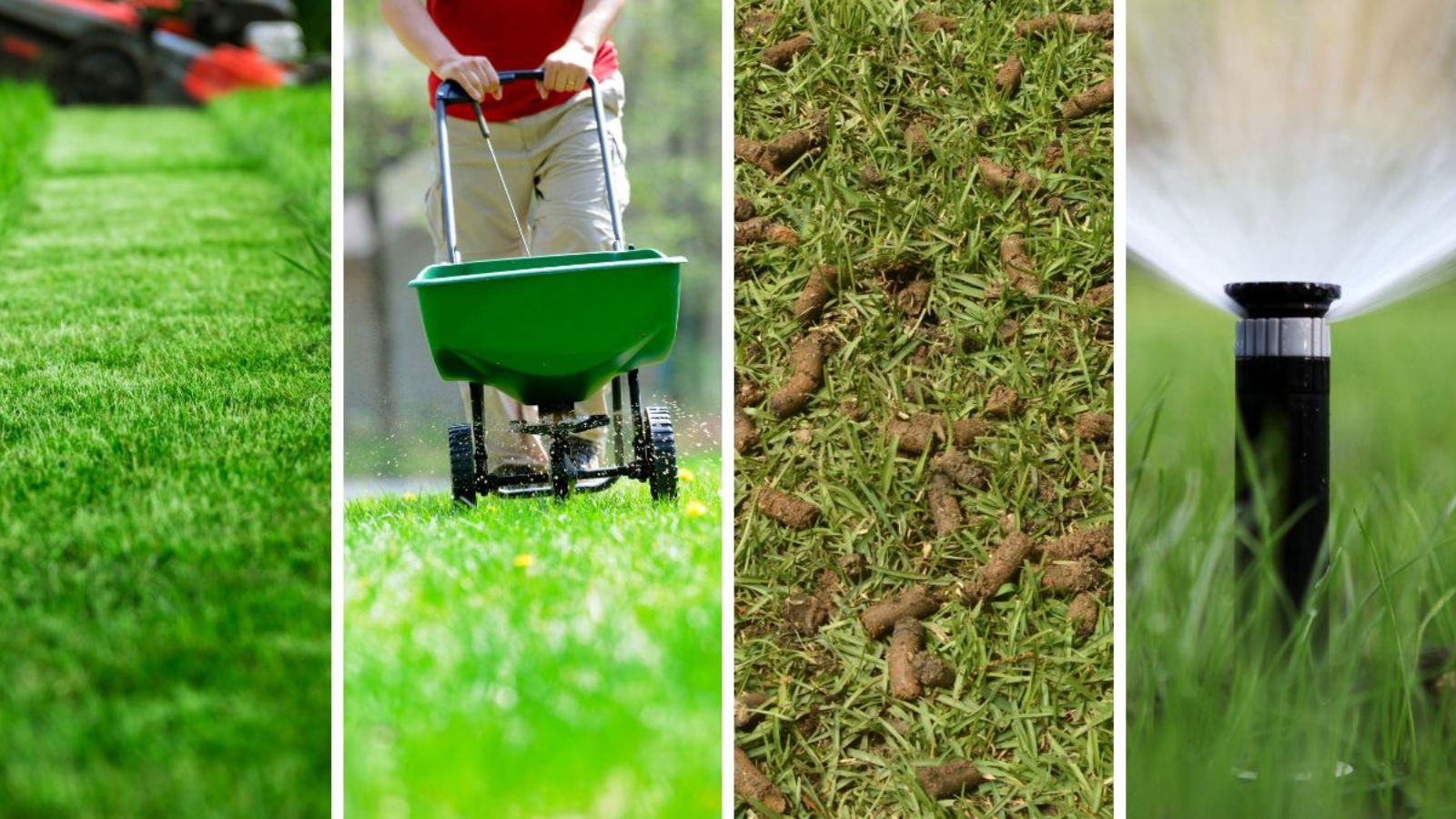
Summer can be hard on any yard. High temperatures, heavy foot traffic, and inconsistent rainfall often lead to brown patches, thinning grass, weeds, and dry, stressed turf.
Many homeowners notice these problems quickly when mowing, watering, or fertilizing routines are inconsistent.
Professional lawn care focuses on the basics that make the biggest difference: proper mowing height, strategic watering, seasonal fertilizing, and healthy soil conditions. When these elements work together, your grass is better equipped to stay green, thick, and resilient during the hottest months of the year.
Expert Tips for a Greener, Healthier Summer Lawn
These core lawn habits help improve appearance and protect turf throughout summer.
| Lawn Care Tip | Why It Matters | Professional Recommendation |
|---|---|---|
| Fertilizing | Supports healthy color, steady growth, and stronger resistance to heat stress | Use slow-release fertilizer based on soil conditions |
| Aeration | Improves airflow, water absorption, and nutrient movement | Core aeration is best before peak summer heat |
| Mowing Height | Protects roots and helps soil retain moisture | Keep grass slightly taller in summer |
| Watering | Encourages deep root growth and drought resistance | Water early and deeply instead of frequent light watering |
Fertilizing for Strong Summer Growth
Fertilizer helps grass stay full, healthy, and better able to handle summer stress. However, too much fertilizer during extreme heat can create additional stress.
Slow-release products are often the best option because they feed gradually instead of all at once.
Best Practices:
- Soil testing helps determine nutrient needs
- Proper timing is typically late spring or early summer
- Balanced nutrients support healthy overall growth
When applied correctly, fertilization helps improve color, density, and durability.
Why Aeration Matters
Compacted soil can prevent water, oxygen, and nutrients from reaching the roots. This is common in lawns with heavy traffic or clay-heavy soil.
Aeration creates small openings that allow the soil to breathe and absorb moisture more effectively.
Benefits of Aeration:
- Better water absorption
- Stronger root growth
- Thicker, healthier turf over time
For many Omaha lawns, aeration can be one of the most valuable services for long-term lawn health.
Set the Right Mowing Height
Cutting grass too short is one of the most common summer mistakes.
Taller grass helps shade the soil, retain moisture, and protect roots from heat stress.
Smart Mowing Tips:
- Never remove more than one-third of the blade at once
- Keep mower blades sharp for cleaner cuts
- Raise mowing height during hotter months
A simple mowing adjustment can make a noticeable difference in lawn performance.
Water Smarter, Not More
The goal of watering is to encourage deep roots, not shallow surface growth.
Frequent light watering can weaken grass and make it more vulnerable during hot weather.
Better Watering Habits:
- Water deeply rather than lightly
- Water early in the morning
- Adjust based on rainfall and temperatures
Morning watering also reduces evaporation and lowers the risk of disease.
Common Summer Lawn Problems to Watch For
Even with regular care, problems can still develop during summer.
Watch for:
- Brown patches caused by heat stress, pests, or disease
- Thin areas linked to compacted soil or poor watering
- Weeds filling in weak spots
- Poor drainage causing standing water or root issues
Addressing these issues early can prevent more expensive repairs later.
Long-Term Lawn Success Comes From Consistency
Healthy lawns are built through steady maintenance—not occasional treatments.
A long-term plan often includes:
- Seasonal fertilizing
- Aeration and overseeding
- Regular mowing and edging
- Irrigation checks and adjustments
Consistent care helps your lawn stay healthier through every season.
Frequently Asked Questions
How often should a lawn be fertilized during summer?
Most lawns benefit from fertilizing in late spring or early summer, depending on grass type and soil conditions. Avoid over-fertilizing during peak heat.
Is aeration necessary every year?
Annual aeration benefits many lawns, especially when compacted soil or heavy use affects them. Some properties may only need it every other year.
What is the best mowing height for summer?
Grass generally performs better when kept slightly taller during hot months, as it helps protect roots and retain soil moisture.
How much water does a lawn need each week?
Most lawns need about one to one and a half inches of water per week, including rainfall. Deep watering is more effective than frequent shallow watering.
Should brown grass always be replaced?
Not always. Brown areas may be caused by temporary stress, pests, or watering issues. A proper assessment helps determine if recovery is possible.
Arbor Hills Landscaping Company Omaha | Best Landscaping Company in Omaha, NE
Arbor Hills Trees & Landscaping Services can provide you with everything from detailed maintenance programs to unique plant production and other services in between. That means we build water features, walls, patios, irrigation, walkways, outdoor kitchens, lighting, and anything else you can help us dream up. Our professionally trained staff can build the landscape of your dreams and keep you from breaking any Home Landscaping Rules. Contact us today.