
Fall leaf cleanup rarely comes down to a simple question of getting leaves off the lawn. The better question is what should happen to them once they have accumulated.
A common situation is a property with leaves covering the lawn, collecting in planting beds, and gathering along sidewalks and patios at the same time. Treating all of that material the same way can create unnecessary work.
The right approach depends on where the leaves are, how heavily they have accumulated, and whether the landscape can make use of the organic material.
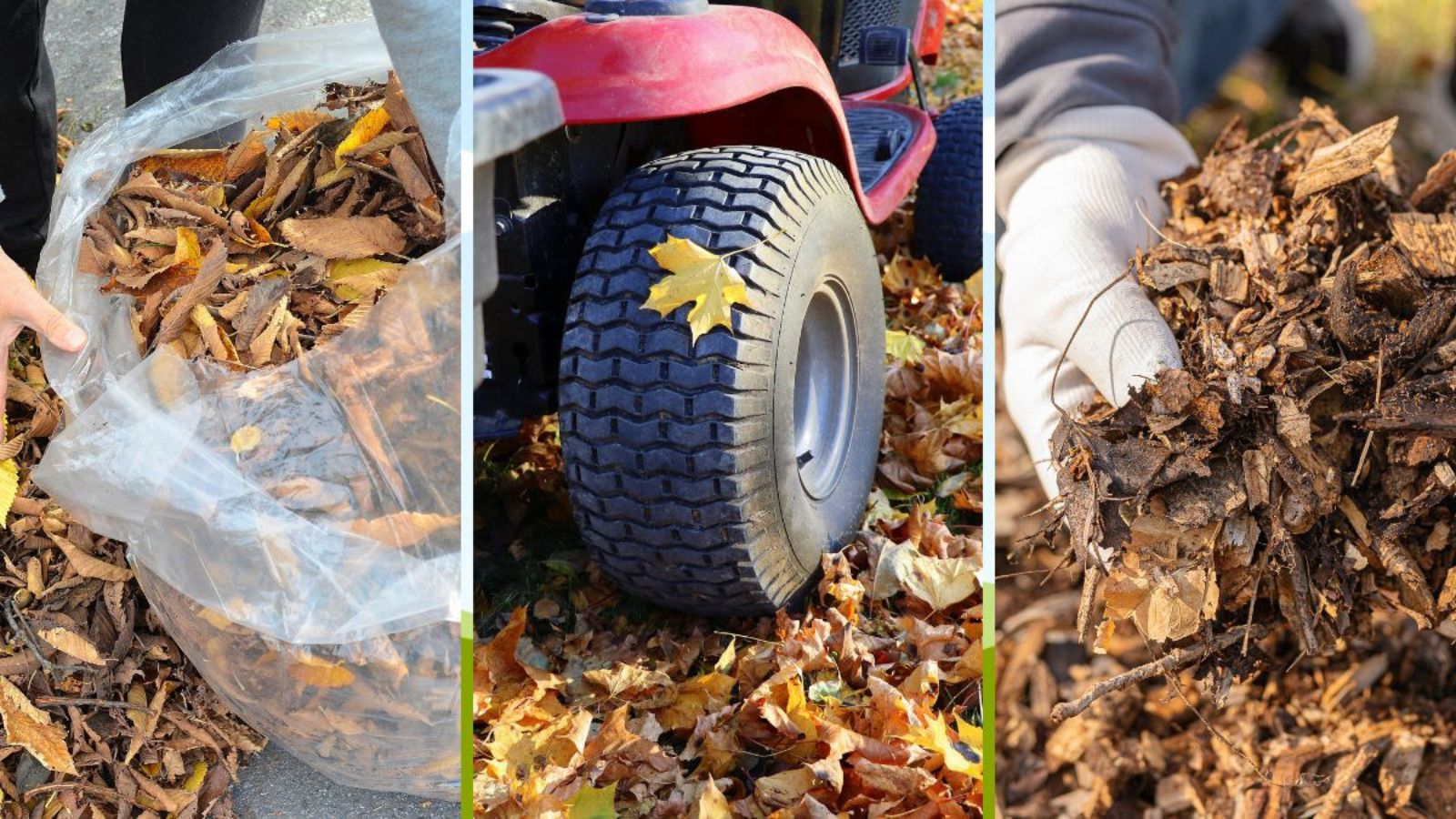
For fall leaf disposal in Omaha, mulching, bagging, and composting each have a practical role. The best choice is usually based on the condition of the property rather than a single rule for every yard.
Leaf Volume Often Determines The First Step
A common misconception is that every leaf should be removed as soon as it reaches the lawn. The amount and location of the leaves usually matter more than the fact that they have fallen.
Before choosing a disposal method, check for:
- Light coverage: Leaves are spread thinly across accessible turf and can often be mulched.
- Heavy accumulation: Several layers have collected, particularly beneath mature trees or in areas affected by wind.
- Wet or compacted leaves: Moisture can cause leaves to stick together and become harder to process evenly.
- Concentrated piles: Leaves have collected along fences, in low areas, or around landscape features.
This quick assessment helps determine whether leaves can remain on the property or need to be collected.
Mulching Works Best With Moderate Leaf Coverage
Mulching is practical when leaves are spread across the lawn in a manageable layer, and the grass remains accessible.
For better results:
- Mow before accumulation becomes heavy. Waiting until the lawn is completely covered can make the material harder to process.
- Break leaves into small pieces. Visible clumps indicate that the material has not been distributed evenly.
- Handle heavy areas separately. Large piles beneath mature trees may need to be cleared rather than repeatedly mowed.
- Keep mulching on the lawn. Leaves on patios, sidewalks, steps, and drainage areas should be removed.
For suitable lawn conditions, mulching allows leaves to remain on the property instead of becoming a separate collection task.
Bagging Helps When Removal Is Necessary
Bagging becomes more useful when leaf accumulation exceeds what the lawn can reasonably handle or when leaves have collected in areas where they should not remain.
This often happens beneath mature trees. Most of the lawn may have moderate coverage while a concentrated section becomes buried under leaves.
Removal can also be appropriate for:
- Patios and walkways
- Drainage areas
- Areas around landscape features
- Heavily covered lawn sections
- Frequently used outdoor spaces
A point that is sometimes overlooked is what happens after collection. Bagging solves the immediate accumulation problem, but the leaves still need an appropriate destination.
Local yard waste requirements should be checked before moving large quantities of leaves to the curb or another disposal location.
Bagging is therefore most useful when removing the material solves a specific landscape problem rather than simply being treated as the default method.
Composting Gives Leaves Another Purpose
Composting provides another option for properties with enough space to manage organic material.
A common mistake is assuming that leaves can simply be placed in a large pile and left alone. Whole leaves can become compacted, particularly after rain, which limits airflow through the material.
Shredding leaves before adding them can make the material easier to manage. Moisture and airflow also need to remain appropriate as the material breaks down.
Composting tends to make the most sense when there is already a practical use for finished compost.
A property may be a good candidate when it has:
- Adequate space for a compost area
- A regular supply of leaves
- Other suitable organic materials
- Planting beds that can use finished compost
- Capacity to maintain the compost over time
Not every property needs to compost its leaves. Limited space or no practical use for finished material can make collection a more suitable choice.
The Best Approach May Use More Than One Method
A recurring pattern in fall cleanup is that the most effective plan does not use the same method everywhere.
A lawn may be suitable for mulching while planting beds retain some leaves. Excess material beneath mature trees may need to be collected, while leaves covering a patio should be removed.
This area-by-area approach matters because different surfaces have different maintenance requirements.
| Landscape area | Practical approach | Why it may work |
|---|---|---|
| Open lawn with light coverage | Mulching | Shredded leaves can remain distributed across the turf |
| Lawn with heavy accumulation | Bagging or partial removal | Excess material can become difficult to process evenly |
| Established planting beds | Selective retention or composting | Organic material may have a useful purpose |
| Patios and walkways | Removal | Leaves can interfere with use and surface drainage |
| Drainage areas | Removal | Accumulated material can interfere with water movement |
This approach can also reduce unnecessary work. A property does not need to be completely cleared of leaves simply because some areas require cleanup.
Timing Can Keep The Cleanup Manageable
Waiting until every leaf has fallen is not always the most practical approach.
Omaha properties can experience different leaf drop patterns depending on tree species, exposure, and weather. Wind can also move leaves from one part of a property into another, creating concentrated piles between cleanup visits.
Frequently used walkways and patios may need attention earlier in the season. Lawn areas can be monitored as coverage increases, while planting beds can be evaluated separately.
Another useful observation is that recurring accumulation points tend to reveal themselves over time. Leaves that repeatedly collect beneath the same tree, along a fence, or near a drainage area may require a different maintenance strategy than the rest of the property.
Monitoring those areas throughout the season can make the final cleanup more manageable.
Choosing The Right Fall Leaf Disposal In Omaha
The best method for fall leaf disposal in Omaha depends on the amount and location of the leaves rather than choosing a single method for the entire property.
From a professional landscaping perspective, mulching is generally the best starting point for moderate leaf coverage. Bagging works better for heavy accumulation or hard surfaces, while composting makes sense when there is space and a practical use for the finished material.
The key takeaway is that fallen leaves do not all need to be handled the same way. Evaluating each area separately can reduce unnecessary removal while keeping the property manageable through the transition into winter.
Frequently Asked Questions
Can leaves stay on the lawn between cleanups?
Light accumulation may be manageable, but leaves should not be allowed to form a thick, compacted layer. Monitoring the lawn between cleanup periods makes it easier to determine when mulching or removal is needed.
Do all leaves need to be removed from planting beds?
No. Some leaves can remain in suitable planting areas, depending on the plants and amount of material present. The important consideration is whether the accumulation is becoming excessive or interfering with drainage and maintenance.
What happens to leaves after professional removal?
Collected leaves generally need to be transported to an appropriate yard waste or composting destination. Disposal requirements can vary, so local Omaha guidance should be checked for current collection and yard waste rules.
Is composting practical for a small Omaha yard?
It can be, provided there is enough space for a properly managed compost area and a practical use for the finished material. For very limited yards, transporting excess leaves to an appropriate composting or yard waste facility may be more practical.
Should leaf cleanup happen before the final leaf drop?
Not necessarily. Cleanup timing depends on how quickly material accumulates and which areas are affected. Frequently used surfaces may need earlier attention, while other areas can be managed as leaf coverage develops.
Arbor Hills Landscaping Company Omaha | Best Landscaping Company in Omaha, NE
Arbor Hills Trees & Landscaping Services can provide you with everything from detailed maintenance programs to unique plant production and other services in between. That means we build water features, walls, patios, irrigation, walkways, outdoor kitchens, lighting, and anything else you can help us dream up. Our professionally trained staff can build the landscape of your dreams and keep you from breaking any Home Landscaping Rules. Contact us today.