
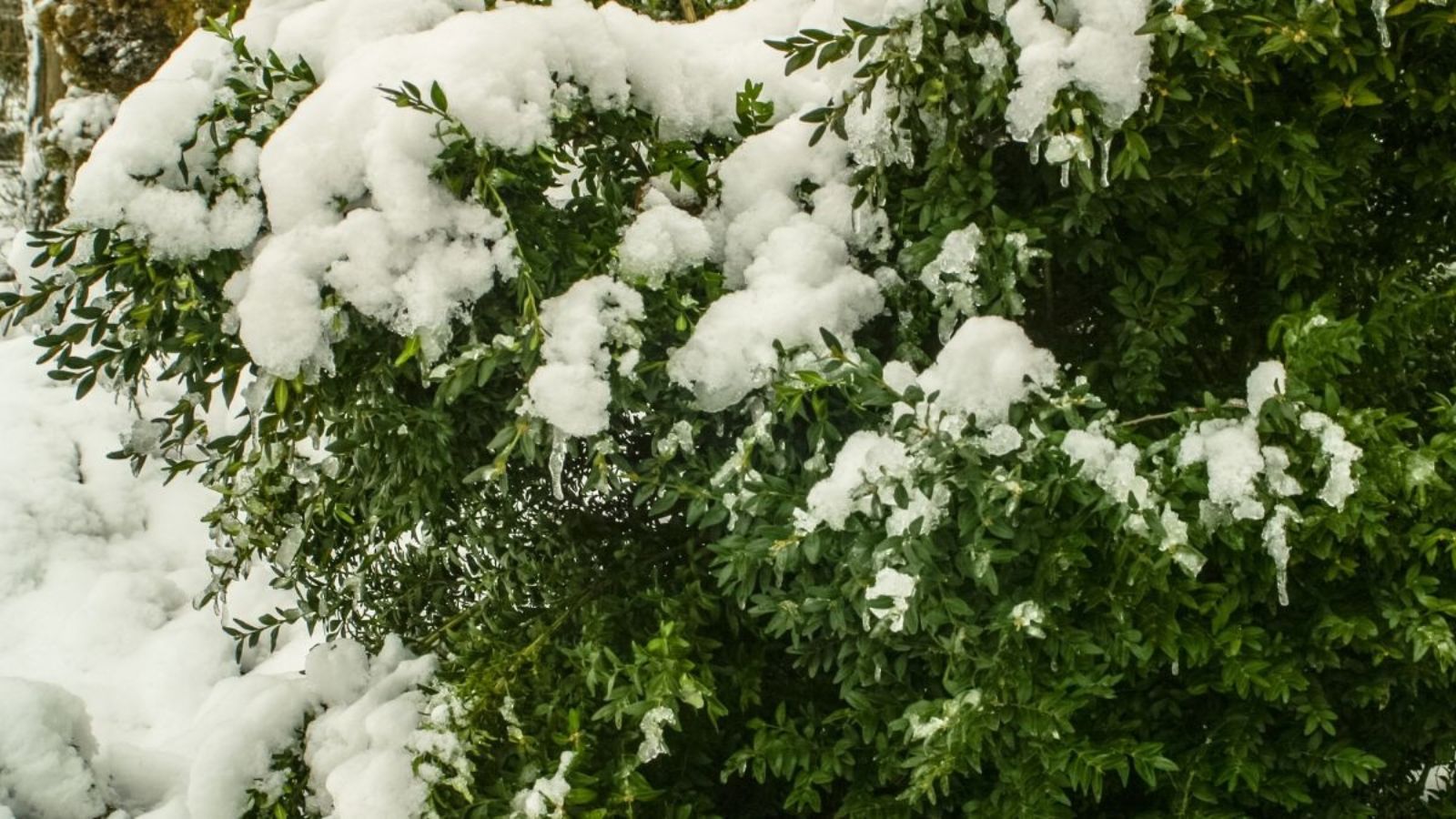
Winter windburn on ornamental shrubs is a recurring concern for homeowners preparing their landscapes for freezing temperatures. Boxwoods and other evergreen plants can develop brown foliage, dry patches, and damaged branches after exposure to cold, dry winds.
The damage often becomes noticeable in early spring, although the underlying stress may have started months earlier. Preparing shrubs before the ground freezes helps maintain soil moisture, protect exposed foliage, and reduce winter injury.
What Causes Winter Windburn on Ornamental Shrubs?
Winter windburn occurs when evergreen foliage loses moisture faster than roots can replace it. Although plants become dormant during winter, their leaves and needles continue losing small amounts of water through transpiration.
The problem worsens when the ground freezes, and roots cannot absorb enough moisture. Strong winds and bright winter sunlight can accelerate water loss.
Several conditions contribute to winter windburn:
- Cold, dry winds: Increase moisture loss from exposed foliage.
- Winter sunlight: Warms leaves and increases transpiration.
- Frozen soil: Limits how much water roots can absorb.
- Temperature fluctuations: Add stress to vulnerable plants.
- Exposed planting locations: Offer little shelter from prevailing winds.
Not every brown leaf indicates windburn. Root problems, pests, and diseases can produce similar symptoms. The location and pattern of discoloration help determine the likely cause.
Which Ornamental Shrubs Need Extra Winter Protection?
Evergreen shrubs are particularly vulnerable because they retain foliage throughout winter. Boxwoods often show damage clearly because their dense green leaves make discoloration noticeable.
Newly planted and recently transplanted shrubs also need attention. Their root systems may not have spread far enough into the surrounding soil to access sufficient moisture.
Other plants that may experience winter desiccation include:
- Arborvitae
- Yews
- Rhododendrons
- Holly varieties
- Certain evergreen junipers
Plant variety matters, too. Some boxwood cultivars naturally develop bronze or reddish-brown foliage during cold weather. This seasonal color change does not necessarily indicate windburn.
Prepare Shrubs Before the Ground Freezes
Preventing winter windburn starts in autumn, while the soil is still workable. Homeowners can take several steps to prepare evergreen shrubs for colder conditions.
Water thoroughly before winter.
Evergreens need adequate soil moisture before freezing temperatures limit root activity. Water during dry autumn periods, especially around newly planted shrubs and plants growing in well-drained soil.
Apply water slowly around the root zone, allowing it to penetrate rather than run off the surface. Avoid leaving soil excessively saturated.
Apply mulch around the root zone.
A two- to three-inch layer of organic mulch helps regulate soil temperature and reduce moisture loss.
Shredded bark and wood chips are suitable options. Keep mulch a few inches away from the main stems to prevent excessive moisture accumulation.
Avoid late-season pruning and fertilizing.
Heavy pruning and nitrogen-rich fertilizer can encourage new growth when shrubs should be preparing for dormancy. Tender growth may be more vulnerable to freezing temperatures.
Complete necessary pruning earlier in the growing season and avoid stimulating unnecessary growth as winter approaches.
Use Burlap Windbreaks to Protect Exposed Boxwoods
Shrubs in exposed locations may need additional protection from prevailing winter winds. Burlap screens reduce direct exposure while allowing air to circulate.
Rather than wrapping foliage tightly, install stakes around the shrub and attach burlap to create a protective barrier.
Consider these installation practices:
- Position the screen between the shrub and prevailing winds.
- Leave space between the burlap and foliage.
- Secure the material against strong winds and snow.
- Avoid airtight plastic sheeting, which can trap heat and moisture.
- Check the structure periodically for damage.
The goal is to reduce wind exposure without restricting airflow. For larger landscapes, strategically placed windbreaks can protect multiple plantings without requiring individual coverings for every shrub.
Recognize and Address Existing Winter Damage
Winter damage does not always become obvious immediately. Some evergreen shrubs retain discolored foliage until spring, when new growth makes affected areas easier to identify.
Watch for these common warning signs:
| Warning Sign | What It May Indicate |
|---|---|
| Brown or bronze foliage | Winter desiccation or cold-related stress |
| Dry, brittle leaf edges | Excessive moisture loss |
| Damage concentrated on one side | Wind or sunlight exposure |
| Dead or brittle branches | More extensive tissue damage |
| Widespread discoloration | Possible root problems or disease |
Foliage that turns brown primarily on the wind-facing side may indicate winter exposure. However, widespread discoloration may require closer inspection.
Avoid immediately removing every discolored branch. Some boxwoods naturally develop winter bronzing, while other evergreen foliage may recover as spring growth develops.
Once temperatures become consistently mild, inspect stems and branches. Green tissue beneath a small area of scratched bark generally indicates living wood. Remove dead branches selectively when the extent of the damage becomes clearer.
Maintain a Seasonal Protection Plan
Winter shrub protection works best when it becomes part of routine landscape maintenance.
Homeowners can follow a simple seasonal schedule:
In fall:
- Inspect boxwoods and other evergreen shrubs.
- Water during dry periods.
- Apply mulch around root zones.
- Install burlap screens around exposed plantings.
- Avoid late-season fertilizing and heavy pruning.
During winter:
- Check burlap screens after strong winds and heavy snowfall.
- Carefully remove excessive snow from branches.
- Monitor shrubs during extended dry periods.
In spring:
- Assess foliage and branches for winter injury.
- Remove dead growth when appropriate.
- Check for recurring planting-location or drainage problems.
For landscapes with extensive boxwood borders or established ornamental plantings, professional assessment can help identify recurring exposure problems and appropriate maintenance measures.
Preventing winter windburn on ornamental shrubs comes down to maintaining adequate soil moisture, reducing exposure to drying winds, and recognizing damage before unnecessary pruning or treatment begins. Preparing shrubs before freezing weather is especially important because frozen soil limits their ability to replace lost moisture.
With appropriate autumn maintenance and a practical winter protection plan, homeowners can help preserve the health and appearance of their boxwoods and other ornamental plantings.
Arbor Hill Landscaping can help evaluate seasonal landscape needs and determine suitable care strategies.
Frequently Asked Questions
Can winter windburn affect shrubs planted near buildings?
Yes. Buildings can provide shelter but may also create wind tunnels that concentrate airflow around planting areas. Reflected sunlight and heat from exterior walls can contribute to temperature fluctuations.
Are some boxwood varieties more resistant to winter damage?
Yes. Winter hardiness varies among boxwood species and cultivars. When replacing repeatedly damaged plants, consider varieties suited to local climate and planting conditions.
Can anti-desiccant sprays prevent winter windburn?
Anti-desiccant sprays form a protective coating intended to reduce moisture loss from foliage. They may provide additional protection for certain evergreens, but effectiveness varies by product and plant species. Follow label instructions and do not use them as a substitute for proper watering.
Should snow be removed from boxwood branches?
Heavy, wet snow can bend or break branches, particularly on densely branched shrubs. Remove excessive accumulation carefully using gentle upward movements. Avoid striking frozen branches because cold wood can be brittle.
When should damaged boxwoods be pruned?
Wait until severe winter conditions have passed and the extent of the damage becomes clearer. Check branches for living tissue before pruning. Selective removal in spring helps avoid cutting healthy branches that may still recover.
Arbor Hills Landscaping Company Omaha | Best Landscaping Company in Omaha, NE
Arbor Hills Trees & Landscaping Services can provide you with everything from detailed maintenance programs to unique plant production and other services in between. That means we build water features, walls, patios, irrigation, walkways, outdoor kitchens, lighting, and anything else you can help us dream up. Our professionally trained staff can build the landscape of your dreams and keep you from breaking any home landscaping rules.