
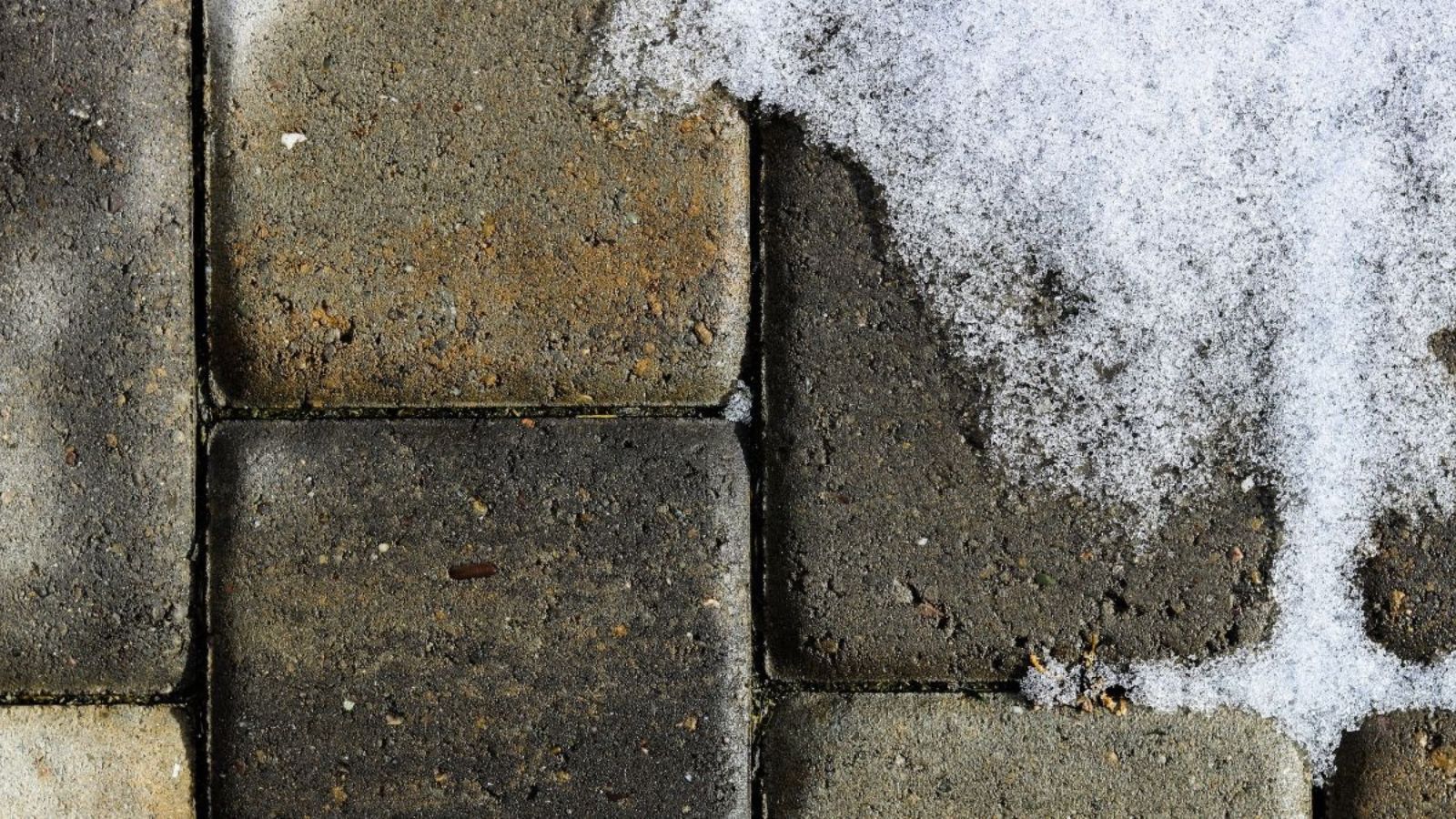
Winterizing Omaha hardscapes helps homeowners prepare patios, walkways, and driveways for Nebraska’s changing winter conditions. Freezing temperatures, thawing snow, and moisture can cause uneven pavers, missing joint sand, and flaking on stamped concrete surfaces.
Damage may become more noticeable in spring, when snow melts and previously hidden problems emerge. Preparing outdoor surfaces before winter helps homeowners address vulnerable areas while conditions remain suitable for maintenance and repairs.
How Freeze-Thaw Cycles Affect Omaha Hardscapes
Water is a major factor in winter hardscape deterioration. When moisture enters concrete pores, cracks, or joints and freezes, it can create stresses that contribute to damage over repeated cycles.
The outcome depends on the material, installation quality, drainage, and existing condition. Concrete pavers are designed for outdoor use, but their joints and supporting base still need attention. Stamped concrete can experience surface scaling when its composition, finishing, curing, or exposure conditions leave it vulnerable.
Watch for these warning signs:
- Uneven pavers: Individual units may shift because of base settlement.
- Missing joint sand: Gaps may indicate that joint material needs replenishing.
- Surface flaking: Concrete may lose thin layers of its surface.
- Recurring puddles: Standing water can indicate drainage problems.
Not every crack or uneven surface results from freezing. Poor installation, settlement, and ordinary wear can also contribute. Identifying the underlying cause helps determine the appropriate repair.
Winterizing Omaha Hardscapes Starts With Drainage
Before applying sealers or purchasing winter maintenance products, inspect how water moves across the property. Reducing unnecessary moisture around paved surfaces is an important part of winterizing Omaha hardscapes.
Walk the patio, driveway, and paths after rainfall when conditions allow. Pay attention to low spots, downspouts that discharge onto paving, and garden beds that direct runoff toward hardscape edges.
Before temperatures drop, homeowners should:
- Clear leaves and debris from paved surfaces and drainage channels.
- Direct downspouts away from patios and walkways.
- Check whether soil or mulch has built up against paved edges.
- Identify areas where runoff repeatedly collects.
- Arrange repairs for persistent drainage problems before the ground freezes.
For example, a patio beside a garden bed may collect water because the surrounding soil slopes toward it. Cleaning the surface will not solve the problem; the drainage route needs attention.
Any grading changes should direct water away from vulnerable areas without creating problems near the home’s foundation or neighboring properties.
Prepare Pavers Differently From Stamped Concrete
Pavers and stamped concrete require different maintenance because they are constructed differently. Understanding these distinctions helps homeowners choose appropriate preparation methods.
| Hardscape Type | What to Inspect | Recommended Preparation |
|---|---|---|
| Concrete pavers | Missing joint sand, loose units, uneven edges | Replenish compatible joint material and correct unstable units. |
| Stamped concrete | Cracks, surface flaking, worn sealer | Clean the surface and assess its condition before treatment. |
| Both surfaces | Standing water and runoff | Correct persistent drainage problems. |
Concrete pavers consist of individual units installed over a prepared base. Check for pavers that rock underfoot or sit noticeably higher than neighboring units. Significant unevenness should be addressed before winter, especially along walkways and driveways where raised edges can interfere with snow removal.
Stamped concrete is a continuous slab with a decorative pattern. Clean the surface and inspect any existing sealer for peeling or deterioration. A compatible sealer may help limit moisture penetration, but it cannot correct structural problems or poor drainage.
Remove Snow and Ice Without Accelerating Damage
Winter maintenance can help keep hardscapes safe, but unsuitable tools and deicing products may contribute to deterioration.
Homeowners should take care when removing snow and treating icy surfaces:
- Use appropriate equipment: Avoid catching raised paver edges with shovel blades or plows.
- Choose deicers carefully: Follow the hardscape manufacturer’s recommendations and product instructions.
- Consider traction materials: Sand may improve traction on conventional paving but can obstruct permeable paver joints.
- Remove excess residue: Clear accumulated slush and leftover deicer when practical.
Deicers are not interchangeable. Some formulations can contribute to concrete deterioration, and newly installed or insufficiently cured concrete needs particular caution. Confirm that a product is suitable for the specific surface before applying it.
Permeable paving requires additional care because its open joints allow water to drain through the system. Follow the installation specifications to avoid obstructing those drainage pathways.
Check Repairs and Sealers Before Temperatures Drop
Fall is a useful time to assess repair needs, but not every job can be completed immediately before winter. Patching compounds, jointing materials, and sealers have specific temperature, moisture, and curing requirements.
Before scheduling repairs or applying a coating, consider:
- Surface condition: Determine whether cracks or flaking require more than cosmetic treatment.
- Product compatibility: Confirm that repair materials and sealers suit the existing surface.
- Weather conditions: Check the required application temperature and curing time.
- Underlying causes: Investigate recurring settlement or cracking instead of repeatedly patching visible symptoms.
A settling paver may need its base corrected, while recurring concrete deterioration may require closer assessment of drainage or installation conditions.
Sealing is not automatically necessary for every hardscape. The right product and application schedule depend on the material, existing treatment, exposure, and manufacturer’s recommendations. Applying sealer to damp concrete or in unsuitable weather can interfere with curing. If conditions are unfavorable, postpone the work until the surface and weather meet the product requirements.
Consider professional assessment when pavers repeatedly settle, concrete develops widespread flaking, or cracks continue to expand.
A Practical Seasonal Plan for Omaha Homeowners
A simple schedule helps homeowners prepare early and evaluate changes after winter.
In fall:
- Inspect surfaces and identify repair needs.
- Clear debris and check drainage routes.
- Complete necessary repairs while conditions permit.
- Confirm product requirements before applying any sealer.
In spring:
- Check for uneven pavers and missing joint material.
- Inspect stamped concrete for new cracks or flaking.
- Reassess locations where water repeatedly collected.
- Investigate recurring damage before it worsens.
Winterizing Omaha hardscapes comes down to managing moisture, maintaining stable surfaces, and choosing care appropriate to each material. Preparing before freezing weather and inspecting surfaces afterward can help Omaha homeowners preserve the appearance, safety, and usability of their outdoor spaces.
Frequently Asked Questions
Can white marks on pavers indicate winter damage?
Not necessarily. White deposits may be efflorescence, a mineral residue left when moisture carries soluble salts to the surface. Avoid aggressive cleaning until you identify the cause, since unsuitable treatments can damage the pavers.
Should permeable pavers be covered during winter?
Usually, no. A covering that traps moisture or obstructs drainage may interfere with the pavement’s intended function. Follow the installation specifications if temporary protection is necessary.
How often should stamped concrete be resealed?
There is no universal schedule. Exposure, foot traffic, the sealer used, and surface condition all influence timing. Follow the manufacturer’s recommendations rather than relying on a fixed annual schedule.
Is pressure-washing safe before winter?
It can be, provided the pressure and equipment suit the surface. Excessive pressure may remove paver joint sand or damage vulnerable concrete. If you use a pressure washer, follow the equipment and surface manufacturer’s guidance.
Can winter damage be repaired in spring?
Yes. Many joint and surface repairs can be completed in spring when conditions are suitable. However, recurring settlement, expanding cracks, or widespread flaking should be assessed to determine whether the underlying cause needs correction first.
Arbor Hills Landscaping Company Omaha | Best Landscaping Company in Omaha, NE
Arbor Hills Trees & Landscaping Services can provide you with everything from detailed maintenance programs to unique plant production and other services in between. That means we build water features, walls, patios, irrigation, walkways, outdoor kitchens, lighting, and anything else you can help us dream up. Our professionally trained staff can build the landscape of your dreams and keep you from breaking any home landscaping rules.